What Is Considered Heavy Duty Towing? A Guide For Darwin And The NT
In Australia, heavy duty towing generally means moving a vehicle or machine with a gross vehicle mass (GVM) over 4.5 tonnes. At that weight, the National Heavy Vehicle Regulator (NHVR) classes it as a heavy vehicle. Heavy duty towing also covers machinery like bobcats, tractors and mini excavators that are too heavy or awkward for a standard tow truck.
Banjo’s Anytime Towing has been providing
towing in Darwin and across the Top End since 2008. Heavy loads are a big part of our work. This guide explains how light, medium and
heavy-duty towing differ, where our 12-tonne tilt tray fits and why towing heavy gear yourself is riskier than it looks.
Table of Contents
What Is Heavy Duty Towing In Australia?
Many towing guides online use US “ton” classes that don’t apply here. In Australia, it’s more useful to think in tonnes and GVM, the maximum a vehicle can weigh when fully loaded. The NHVR’s 4.5-tonne line gives you a clear starting point.
Here’s how the three towing categories generally break down:
- Light-duty towing: everyday cars, small SUVs and utes sitting well under 4.5 tonnes.
- Medium-duty towing: larger 4WDs, vans, motorhomes, light trucks and compact machinery sitting close to or around the 4.5-tonne mark.
- Heavy-duty towing: vehicles and machines over 4.5 tonnes GVM, including trucks, tractors, forklifts, rollers and excavators.
Weight isn’t the only factor. Length, height and whether the load can drive or roll all change the equipment required. A broken-down forklift with locked wheels needs more planning than a running light truck of the same weight.
Do You Need Heavy Duty Towing In Darwin And The NT?
Territory conditions put extra strain on heavy vehicles and the people moving them. Long distances between towns, unsealed roads, Wet Season downpours, relentless heat and remote work sites all raise the stakes. A recovery that would be routine in a city can become a full-day job out here.
Common situations where you’ll need heavy-duty towing include:
- A motorhome breaking down on the Stuart Highway, far from the nearest workshop
- A tractor or slasher that needs to move between rural blocks around Humpty Doo or Darwin River
- A light truck bogged on an unsealed access road after a Wet Season storm
- Machinery that needs to come off a remote station or construction site for repairs
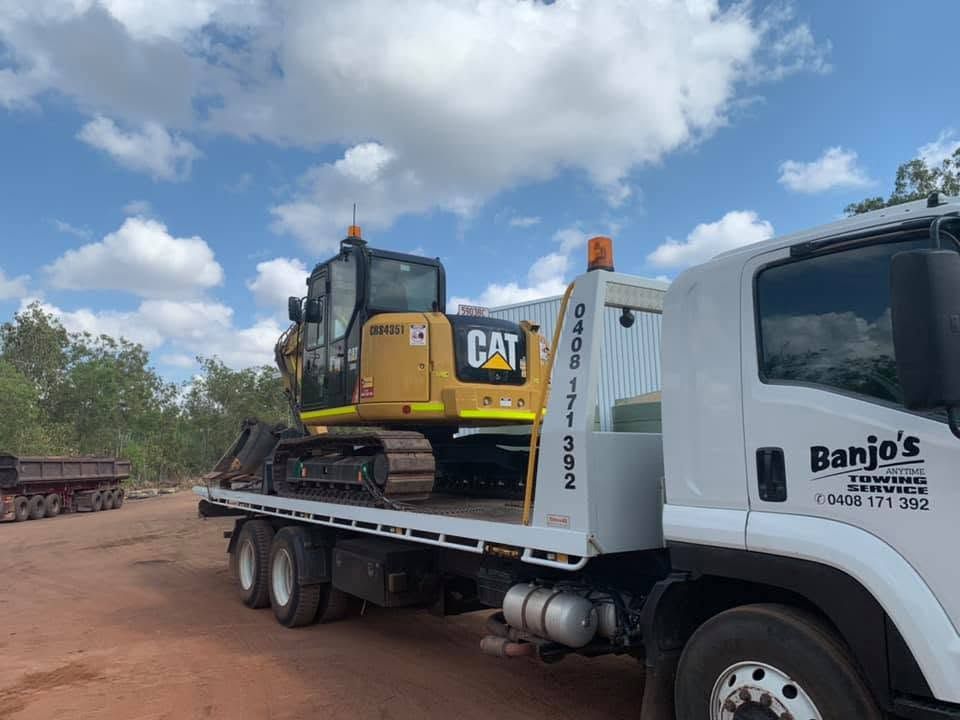
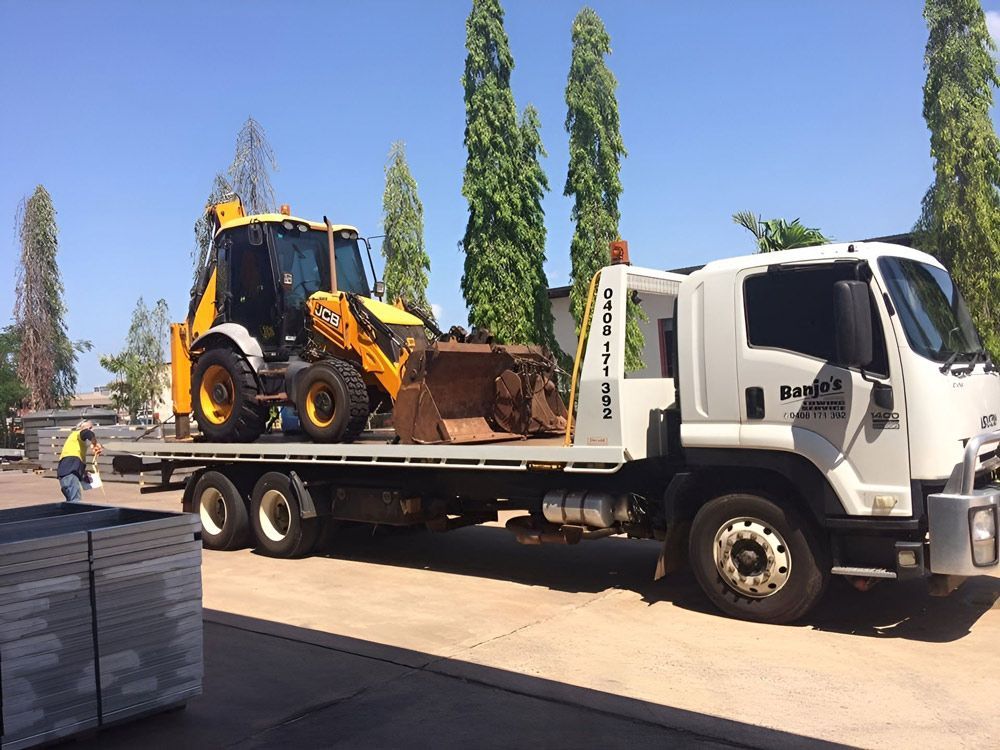
Example: A builder in Palmerston finishes a slab and needs a mini excavator and a bobcat moved to a new block in Howard Springs the next morning. Instead of two trips on an undersized trailer, the operator chains both machines onto a 12-tonne tilt tray and delivers them in one run.
If your load is within 12 tonnes, our heavy-duty towing team can get it moved safely across Darwin and the NT. For permits and planning tips on bigger moves, read our guide to relocating heavy equipment in the NT.
Medium Duty Towing: Where Does A 12-Tonne Tilt Tray Fit?
Medium-duty loads often catch people out. A loaded van, a motorhome or a small pantech truck can look manageable, but these vehicles often sit near or over the 4.5-tonne line. They need specialist gear, not a general car carrier.
Banjo’s heavy-duty tilt tray carries up to 12 tonnes, so it covers the full medium range and well into heavy-duty territory. That includes:
- Bobcats and skid steers
- Mini excavators
- Tractors and forklifts
- Rollers
- Light trucks
- Vans and motorhomes
Construction crews use our plant equipment transport to move bobcats, rollers and mini excavators between job sites. Tractors and other agricultural machinery often fall into the medium to heavy-duty range, depending on their weight and attachments.
A tilt tray suits heavy loads for three practical reasons:
- The vehicle travels off the road. There’s no wear on tyres or the drivetrain and no reliance on brakes or steering that may not work.
- We secure it with rated chains and straps. We match every tie-down to the load, so nothing shifts on corners or rough patches.
- The loading angle is gentle. Low machinery and damaged vehicles go on without scraping or extra stress.
Towing Capacity: How Much Can Your Vehicle Safely Tow?
Every vehicle has three ratings that matter when towing:
- Towing capacity: the maximum trailer weight the manufacturer allows, usually listed separately for braked and unbraked trailers.
- GVM (gross vehicle mass): the maximum the tow vehicle can weigh, including passengers, fuel and the trailer’s ball weight.
- GCM (gross combination mass): the maximum combined weight of the tow vehicle, the trailer and everything loaded on both.
Many popular dual-cab utes are rated to tow up to 3.5 tonnes braked, but that figure assumes a near-empty ute. Once you add a crew, tools and a full tank, you can exceed the GCM well before the trailer reaches 3.5 tonnes. A mini excavator on a plant trailer adds up quickly.
Are You Considering a DIY Tow?
Going over your vehicle’s limits affects braking, steering and stability. It can also leave you uninsured if something goes wrong. Before you hook a heavy load to your own vehicle, read about the dangers of DIY heavy duty towing.
Weight Distribution: Why Does It Matter When Towing Machinery?
Machinery rarely carries its weight evenly. An excavator is heavy at the counterweight and cab, a bobcat is heavy at the rear and a tractor with a front-end loader carries a lot of weight up front. Where that weight sits on the trailer changes how the whole combination handles.
Load too far back and the trailer can sway dangerously at highway speed. Load too far forward and you overload the tow vehicle’s rear axle, which lightens the front wheels and reduces steering and braking. On a wet, unsealed NT road, either mistake can end badly.
Experienced operators position each machine so its weight sits over the tray’s axles, then secure it at its designed tie-down points. It’s a big part of why professional heavy towing is safer than a trailer and a best guess.
Schedule A Heavy Tow Today
Banjo’s Anytime Towing is Territory owned and operated from Humpty Doo. Since 2008, we’ve moved vehicles and machinery right across the NT. We’re fully licensed and insured, with a 5-star Google rating from our customers.
If your load is under 12 tonnes and needs to move, call us before you risk it on a trailer. We’re open 24 hours a day, 7 days a week, including weekends and public holidays. Phone 0408 171 392 or contact us online to book a heavy tow or talk through your load.
Heavy Duty Towing FAQs
What counts as a heavy vehicle in Australia?
The NHVR classes any vehicle with a GVM over 4.5 tonnes as a heavy vehicle. Heavy machinery like excavators and tractors also generally needs heavy-duty towing because of its weight and size.
How heavy a load can Banjo’s tow?
Our heavy-duty tilt tray carries up to 12 tonnes. If you’re unsure of your load’s weight, call us and we’ll help you work it out.
Can I tow heavy machinery with a ute?
Sometimes, but it depends on your ute’s towing capacity, GVM and GCM, plus the combined weight of the machine and trailer. Many setups go over these limits once you load the ute, which affects safety and insurance. For anything near the limit, a tilt tray is the safer option.
Is Banjo’s available 24/7?
Yes. We’re open 24 hours a day, 7 days a week, including weekends and public holidays, for towing across Darwin and the NT.